

A shop on NIBM Road needs more than a quick spray or a box of poison: the provider must find how rodents enter, protect stock and food-contact areas, and return to verify the result. By the end, you will know how to confirm service coverage, identify the infestation, compare treatment plans, and choose a provider on evidence rather than visit count or price alone.
Key takeaways
- Confirm coverage for Salunke Vihar, Mohammed Wadi, Undri, and your exact building.
- Require an inspection covering droppings, entry gaps, food storage, drains, and nesting areas.
- Choose secured bait stations and non-chemical controls for food-handling areas.
- Compare visit frequency, monitoring records, treatment materials, and follow-up commitments.
Which rodent-control providers serve shops along NIBM Road?
A provider genuinely serving shops on NIBM Road must confirm the exact commercial cluster before you book. Ask whether the team covers Salunke Vihar, Mohammed Wadi, Undri, and the building where your shop operates.
Confirm that the service includes retail floors, storerooms, kitchens, basements, and shared buildings, not only residential premises. Ask for an inspection appointment, emergency response time, service-area confirmation, access requirements, invoice, product labels, and safety instructions.
Use this comparison when calling providers:
| Provider check | Acceptable evidence | Warning sign |
|---|---|---|
| Area coverage | Names your NIBM Road cluster and nearby service routes | “We cover all Pune” without a specific answer |
| Commercial capability | Experience with shops, food areas, shared drains, and adjoining units | Residential-only treatment |
| Treatment accountability | Identifies the pesticide operator and explains customer and stock protection | No named operator or safety procedure |
| Written scope | Lists proofing, monitoring, carcass removal, and follow-up | One low fee with no inclusions |
Search results for rodent control for nibm road can identify options, but a phone call must establish whether neighbouring units, shared drains, or ceiling voids can be inspected. A provider that cannot explain how technicians work around customers and stock is not suitable for commercial use.
Compare written scopes before booking. A low advertised fee may exclude proofing, monitoring, carcass removal, or follow-up, making it more expensive than a documented service.
What should the inspection find before treatment starts?
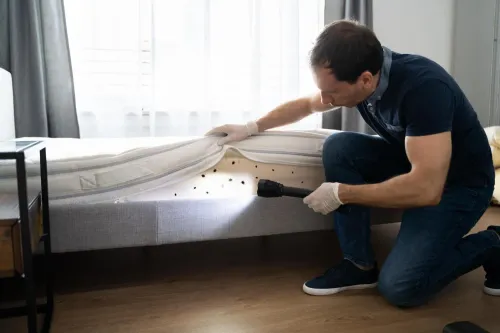
A technician should inspect the shop boundary and interior before placing bait or traps, then record each finding on a site plan. Treating only visible droppings leaves the entry route untouched.
1. Check the boundary for shutter gaps, delivery doors, drains, plumbing penetrations, electrical conduits, vents, wall joints, and floor openings. A mouse can pass through a gap about 6 mm, or one-quarter inch, wide, so inspect below shutters and around pipes closely.
2. Inspect false ceilings, storage racks, waste areas, kitchens, basements, and adjoining units. Shared drains, ceiling voids, or a neighbouring shop can maintain activity after the visible signs inside one premises are removed.
3. Identify the likely rodent. Large droppings, heavier gnaw marks, grease trails, and noises above a roof or ceiling point more towards rats. Small rice-shaped droppings, fine gnawing, and narrow entry points fit mice more closely.
4. Confirm whether activity is current. Fresh droppings, tracks, nesting material, rub marks, disturbed bait, and new gnawing indicate ongoing movement. Old, dry droppings alone do not prove that rodents remain.
5. Ask the rodent control service NIBM Road technician to photograph or map each sign, entry point, and recommended repair. This inspection gives you a defensible treatment plan instead of a chemical application aimed at the most visible droppings.
Which treatment plan fits a retail shop or food-handling area?
After locating the access route and active areas, the provider should use an integrated plan: remove food and water sources, improve waste handling, seal openings, then add traps or bait where monitoring shows they are needed. Extermination alone fails when shutters, drains, or wall penetrations remain open.
| Method | Best fit | Controls required |
|---|---|---|
| Snap traps | Retail floors and sensitive areas | Inspect frequently; keep away from customers and stock |
| Live-capture traps | Areas where a hidden carcass could create odour | Check frequently and remove captured rodents safely |
| Tamper-resistant bait stations | Inaccessible voids, basements, and service areas | Secure, label, map, and keep inaccessible to food, packaging, utensils, children, and non-target animals |
Ask for these details before approving the work:
- Proposed bait active ingredient and station type
- Placement map covering the shop, waste area, basement, ceiling void, and shared routes
- Inspection and servicing frequency
- Carcass-removal procedure and emergency contact
- Sealing materials and corrective actions included in the quote
In kitchens and food stores, protect food-contact surfaces, packaging, utensils, and stock from pesticides and bait. Keep treatment dates, products or methods, corrective actions, and verification results in the shop’s hygiene records. Retail floors need discreet placement and customer protection, while shared ceilings, drains, waste rooms, and adjoining units need attention beyond the sales area.
Ultrasonic devices do not replace exclusion, sanitation, trapping, or bait management. Good shop rodent control is measured by closed entry routes and verified monitoring, not by the number of visits.
How should you compare a rodent extermination provider on NIBM Road?
A real commercial protection plan documents what happens between visits, not just the number of visits. Compare each offer against the same scope before accepting a rodent extermination NIBM Road quote.
| Offer | Inspection and treatment | Proof of ongoing control |
|---|---|---|
| One-time visit | Checks visible droppings, places bait or traps, and leaves without mapping entry routes | No scheduled reinspection, monitoring record, or written recommendations |
| Documented programme | Examines shutters, delivery doors, drains, pipe penetrations, conduits, ceiling voids, racks, waste rooms, and adjoining units; combines sanitation, proofing, traps, and bait | Provides station map, monitoring records, proofing materials, follow-up visits, verification, and an emergency contact |
Ask whether the technician will inspect an adjoining unit, shared drain, ceiling void, or waste room when those areas feed the infestation. The written scope must identify access repairs, bait-station placement, station type, servicing frequency, proposed active ingredient, carcass-removal method, and what happens if activity continues.
Request these documents before work starts:
- The operator’s legal authorisation to use pesticides in India
- Product labels, safety instructions, invoice, and proposed active ingredient
- A written reinspection schedule and follow-up terms
- Written recommendations covering proofing, waste handling, and customer or stock protection
For commercial rodent control, the number of visits matters less than what each visit includes. Compare Lifecare Pestcontrol Services :Ecofriendly service with other teams serving Salunke Vihar, Mohammed Wadi, and Undri by asking the same questions about shop access, proofing, bait records, emergency response, and follow-up.
A quote that omits access repairs and verification is not comparable with an integrated programme.
Related service
Lifecare Pest Control ₹1800 Keep your home and workplace protected with Lifecare Pest Control’s professional rodent control service. View service → |
What should happen after the first treatment?
A shop is not clear because one treatment removed visible signs. Clearance requires recorded follow-up, fresh evidence, and repairs that block the route back in.
1. Keep the written inspection report, treatment dates, products or methods used, station locations, corrective actions, and verification results. Food businesses should retain these records within their hygiene system.
2. Check for fresh droppings, new gnaw marks, tracks, disturbed bait, nesting material, rub marks, and rodent odour according to the agreed monitoring schedule. Old, dry droppings alone do not prove that rodents remain.
3. Treat continued activity as a reason to investigate, not automatic proof that the first treatment failed. Replenished food waste, an untreated neighbouring unit, a shared drain, a ceiling void, or one missed entry point can keep rodents active. Ask the provider to revise the proofing plan and return under the agreed follow-up terms.
4. Protect staff during cleanup. Do not dry-sweep or vacuum droppings, urine, or nesting material. Ventilate the area, wear gloves, soak contamination with disinfectant for the label’s stated contact time, and wipe it up.
Train staff to report signs before rodents reach stock, packaging, utensils, or food-contact surfaces. Keep bait stations and treatment materials inaccessible to food and customers, and record each servicing visit.
Frequently asked questions
Which rodent-control providers serve shops along NIBM Road?
Ask each provider to confirm service coverage for Salunke Vihar, Mohammed Wadi, Undri, and your shop’s exact commercial building before booking.
What should the inspection find before treatment starts?
The inspection should identify droppings, gnaw marks, entry gaps, damaged stock, food sources, drains, nesting areas, and routes behind counters or storage units.
Which treatment plan fits a retail shop or food-handling area?
Retail shops need a plan combining sanitation, proofing, monitoring, and secured bait stations. Food-handling areas require careful placement that prevents contamination and protects customers and staff.
How should you compare a rodent extermination provider on NIBM Road?
Compare inspection detail, treatment materials, bait-station security, visit frequency, reporting, emergency response, and the provider’s experience with commercial premises.
What should happen after the first treatment?
The provider should check stations and traps, review fresh evidence of activity, record findings, replace or remove materials safely, and recommend follow-up work or building repairs.